
Flat roofs are common across Ontario on commercial buildings, industrial facilities, schools, apartments, and modern homes. They’re durable, practical, and cost‑effective, but like any building system, they have a limited lifespan. In a province known for heavy snow, freeze–thaw cycles, and unpredictable weather, understanding how long a flat roof lasts is essential for budgeting, planning, and protecting your property.
In Ontario, flat roofs generally last 15 to 40 years, depending on the material, installation quality, and maintenance. The climate plays a major role—snow loads, ice, and temperature swings can shorten a roof’s lifespan if the system isn’t designed and maintained properly.
Most commercial flat roofs in Canada fall within a 10–30 year range depending on maintenance history and environmental exposure.
Ontario’s weather is one of the biggest factors affecting flat roof longevity. Key stressors include:
A roof that might last 30+ years in a mild climate may only reach the lower end of its lifespan in Ontario without proper care.
What Impacts the Lifespan of a Flat Roof?
1. Material Selection
Different membranes perform differently depending on the building type. For example, EPDM is not ideal above restaurants because grease exhaust can degrade the rubber.
2. Installation Quality
A flat roof is only as good as the crew installing it. Proper detailing, drainage design, and adherence to manufacturer specifications can add years to a roof’s life.
3. Maintenance
Flat roofs require regular inspections and upkeep. Neglect can dramatically shorten their lifespan.
Maintenance should include:
Annual inspections—especially after winter—can prevent small issues from becoming major failures.
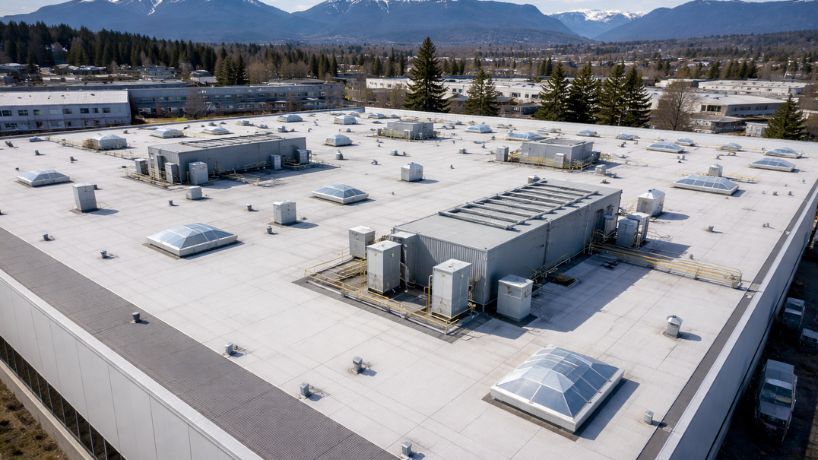
Common warning signs include:
Freeze–thaw cycles can turn small cracks into major problems by spring.
Repairs can extend a roof’s life, but replacement becomes the better option when:
To get the most out of your investment:
A flat roof in Ontario can last 15 to 40 years, but only if the right materials, installation practices, and maintenance routines are in place. With the province’s harsh climate, proactive care is the key to protecting your building and avoiding costly surprises.